The show › EP 166
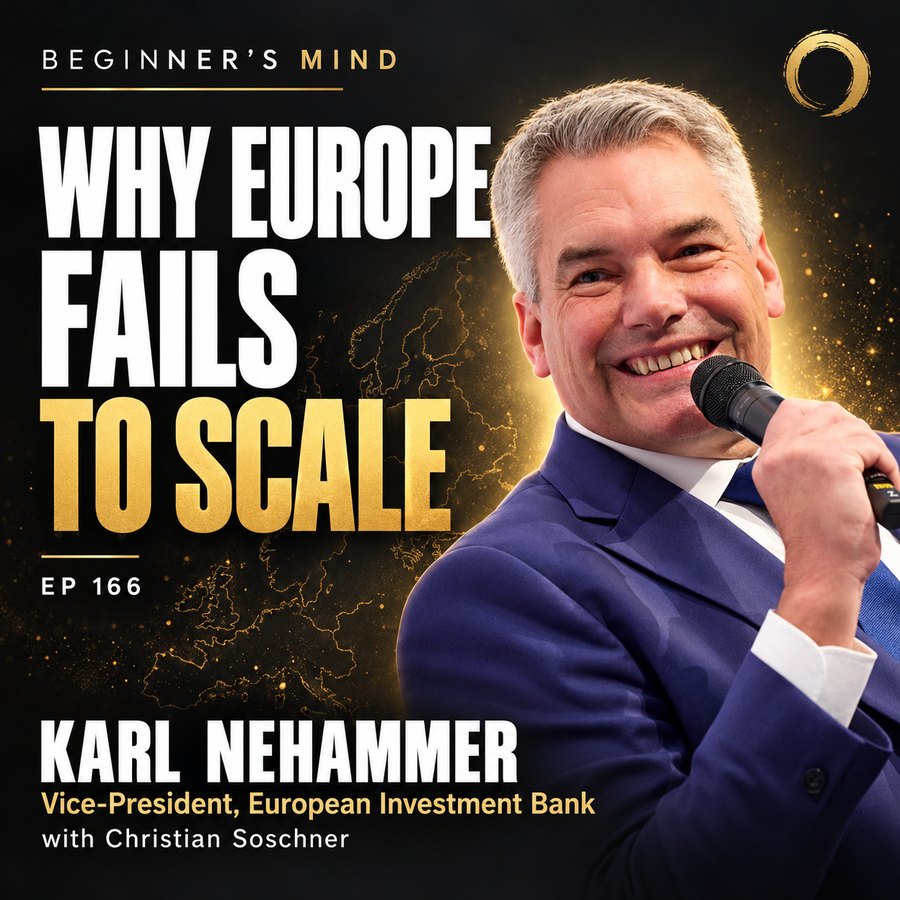
Why Europe Fails to Scale, and How the EIB Plans to Fix It
Karl Nehammer, Vice-President of the European Investment Bank and former Federal Chancellor of Austria
About this conversation
Europe produces some of the best science in the world, and too much of it leaves before it becomes a company. Startups are born in European labs and scale in the United States. What is missing is rarely the idea. It is the capital, the market and the confidence to build something large at home.
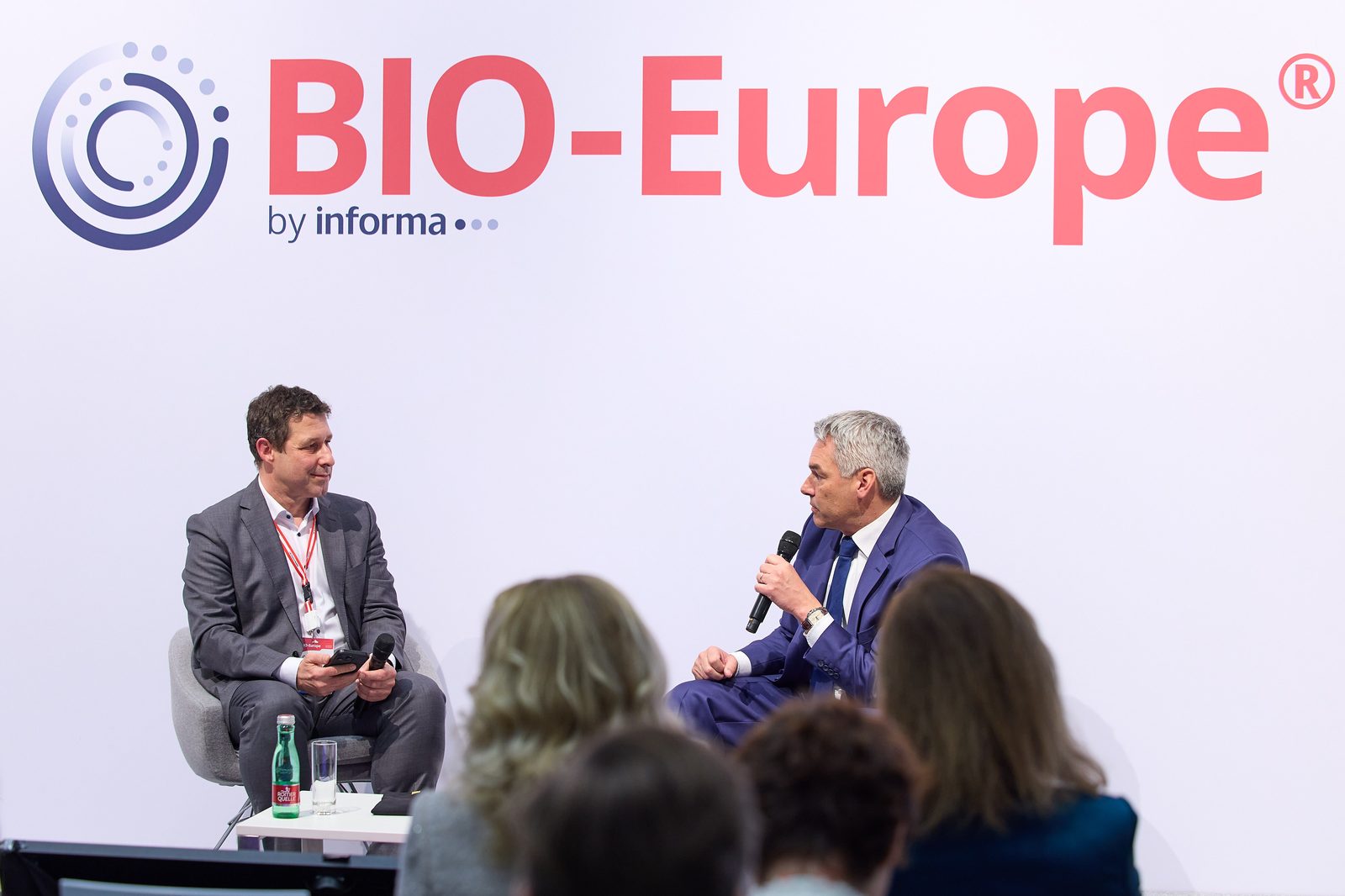
Karl Nehammer led Austria as Federal Chancellor through the end of the pandemic, the energy crisis after Russia's invasion of Ukraine, and the first diplomatic missions to Kyiv and Moscow. In 2025 he became Vice-President of the European Investment Bank. Two months into the new role, he joined me live on stage at BIO-Europe 2025 in Vienna.
His answer to why Europe fails to scale starts with expectations. Fix the basics first: a real single market, one capital market, more risk capital and less regulation. Stop living in the problem. And treat the pressure from the United States and China as a window of opportunity.
We also talk about what the life-science industry proved during COVID, why supply chains are still Europe's weak point, how the EIB group wants to be the bridge between science, capital and the market, and his message to the founders in the room.
Questions in this conversation
- 03:28 What did Karl Nehammer learn as Chancellor that he brings to the European Investment Bank?
- 06:21 Why does Europe struggle to turn world-class science into global companies?
- 09:17 What did the pandemic teach Europe about life sciences?
- 11:00 What is “Sudern”, and why does Karl Nehammer call it a European problem?
- 12:52 What is Karl Nehammer’s vision for Europe?
- 17:06 What does the European Investment Bank do for startups and growing companies?
- 19:00 What is Karl Nehammer’s message to the people building Europe’s future?
Watch the full conversation
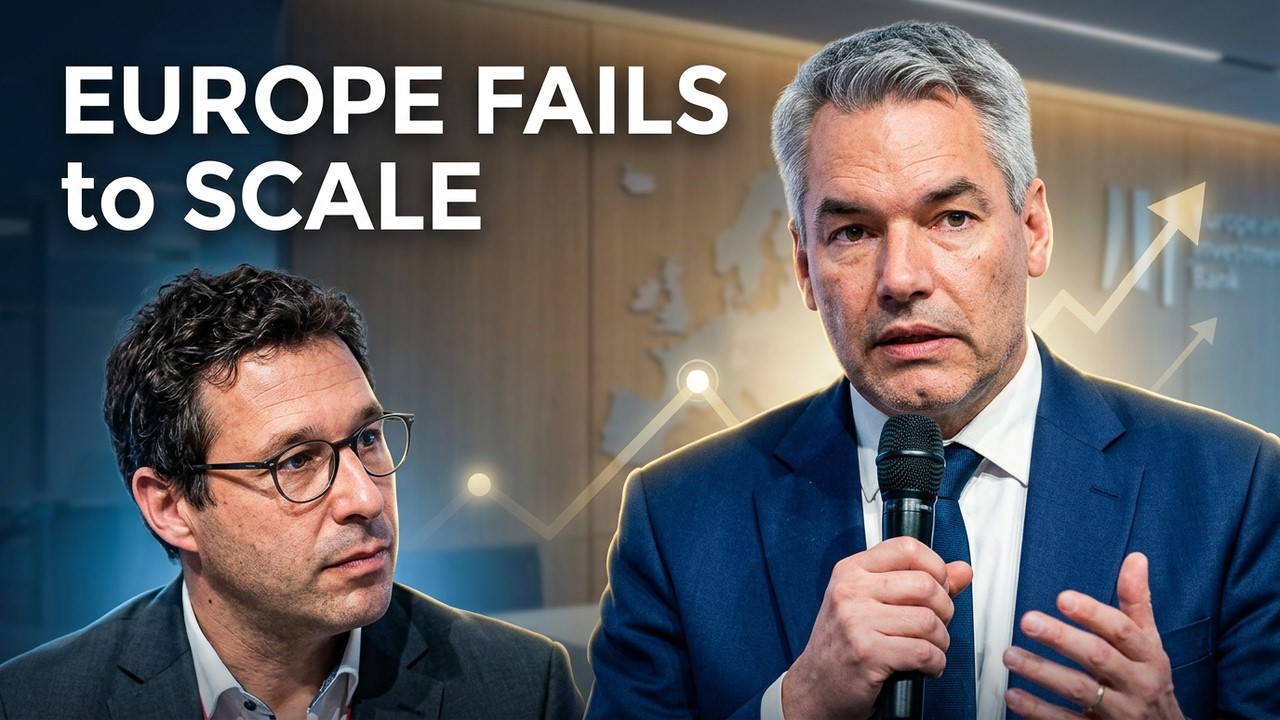
Plays on click. Only then does the video load from YouTube (youtube-nocookie.com). Privacy
The questions, answered
What did Karl Nehammer learn as Chancellor that he brings to the European Investment Bank?
That every crisis is also a chance. As Chancellor he led Austria through the end of the pandemic, the war in Ukraine and an energy crisis that began with an 80% dependence on Russian gas, and none of them came with a guidebook. Each one forced him to decide quickly and to look for solutions in new places, which is the experience he now brings to the EIB.
“You learn a lot, you have to decide quickly, and you always have to think, sometimes in totally new ways, because for all these crises there was no guidebook.”
Karl Nehammer
Watch from 03:28 on YouTube · Listen from 03:28 on Buzzsprout
Why does Europe struggle to turn world-class science into global companies?
Europe is excellent at research, yet many of the startups it produces leave, often for the United States. Nehammer names high energy costs, too much regulation and too little risk capital, and his remedy follows from that: less regulation, more speed, a working capital market and a change in culture. He reads the pressure from the United States and China as a window of opportunity, since it is forcing Europe to make changes it has discussed for years.
“We are really great in research and science, and afterwards we see startups that don’t stay.”
Karl Nehammer
Watch from 06:21 on YouTube · Listen from 06:21 on Buzzsprout
What did the pandemic teach Europe about life sciences?
One lesson is encouraging and one is sobering. Under real pressure, the European Union can act fast: scientists shared their knowledge across borders and found a vaccine. The same crisis exposed how fragile Europe’s supply chains are, and Nehammer is clear that this work is still in progress.
“COVID showed us in a brutal way how fragile we are, if we think about supply chains.”
Karl Nehammer
Watch from 09:17 on YouTube · Listen from 09:17 on Buzzsprout
What is “Sudern”, and why does Karl Nehammer call it a European problem?
Sudern is the Viennese tradition of skipping the good part and going straight to the bad, ideally while complaining in a bar. Nehammer says it has spread far beyond Vienna and Austria and is now a European pattern. His way out is to put the energy into solving the problem, and he points to the many member states already finding new solutions.
“To overcome a crisis, you have to think about how you can solve the problem and not live in the problem.”
Karl Nehammer
Watch from 11:00 on YouTube · Listen from 11:00 on Buzzsprout
What is Karl Nehammer’s vision for Europe?
A Europe that does its job first. He wants to accept the EU as it is, 27 democracies in a construction with no equal in the world, and he warns that overloaded expectations set it up to fail. His priorities are a real single market with the same rules, a well-functioning infrastructure and a capital market that provides risk capital. As one example, the 27 member states still have no common railway standards.
“If we overload the expectations, the EU cannot win.”
Karl Nehammer
Watch from 12:52 on YouTube · Listen from 12:52 on Buzzsprout
What does the European Investment Bank do for startups and growing companies?
The EIB group, which includes the European Investment Bank and the European Investment Fund, sees itself as a partner and a bridge. It helps startups find financing, supports the restructuring and transformation of Europe’s economy, and works with the member states on their plans. Two months into the role, Nehammer describes himself as deeply impressed by the quality and expertise of the staff.
“What we are trying to do now is to build bridges, to do what we can to help startups find financing, and to help the economy in the union restructure and transform.”
Karl Nehammer
Watch from 17:06 on YouTube · Listen from 17:06 on Buzzsprout
What is Karl Nehammer’s message to the people building Europe’s future?
Believe in yourselves, and act without waiting for someone else to do it. Speaking to a room that celebrated the women in life sciences, he pointed to how much has changed in 30 years and argued that diverse teams are good for business and for society. He sees creating the opportunities as the job of politics.
“If you have a strong will, you can also overcome hurdles.”
Karl Nehammer
Watch from 19:00 on YouTube · Listen from 19:00 on Buzzsprout
Best quotes
“Every crisis is also a chance. You learn a lot, you have to decide quickly, and sometimes you have to think in totally new ways.”
“I think we have the knowledge now of what we have to change, and it's a kind of window of opportunity now, because we are under pressure.”
“The only chance we have to overcome a problem is to think about how we solve it, and not how we suffer.”
“Let us do our job. Let us build a real single market and a well-functioning infrastructure.”
“80 years of peace, 70 years of freedom and democracy, and 30 years of membership in a union.”
“Empower yourself. Don't wait for another person. You can do it yourself.”
Show notes
Click a timestamp to listen from that moment on Buzzsprout.
- 00:00Opening: why Europe struggles to scale
- 03:33Leadership lessons from crisis
- 06:21Europe's innovation challenge: science versus commercialization
- 09:17Life-science resilience: lessons from COVID-19
- 12:52A realistic vision for Europe's future
- 17:05Inside the European Investment Bank: bridges between capital and innovation
- 18:59A message to Europe's builders
- 20:14Closing
Links
- Karl Nehammer on LinkedInFollow Karl
- European Investment BankThe EU bank Karl serves as Vice-President
- European Investment FundThe EIB group arm for venture and growth finance
- BIO-EuropeWhere this conversation was recorded live
Full transcript
Christian Soschner00:00:00
Europe creates some of the greatest scientific discoveries on the planet, and yet most never reach the people they were made for. They stay locked in labs, in institutions, in PowerPoint decks, while other regions turn ideas into billion-dollar companies. Why? Because innovation doesn't change the world. Commercialization does.
In today's episode, we explore how Europe can bridge that gap: how science becomes scale, and how ideas become impact. My guest at BIO-Europe this week has led through some of the toughest moments in modern history, from the pandemic and the energy crisis to diplomatic missions during the war between Ukraine and Russia.
Now our former Chancellor Karl Nehammer, in his new role as Vice-President of the European Investment Bank, brings that experience to one mission: building a Europe that competes and wins through innovation. Europe produces excellence but struggles to scale it. Every year, talent and technology slip through the cracks. The solution? Investment, leadership and a mindset shift at the highest level, one that Karl is now driving from inside the European Investment Bank.
Today he shares how leadership forged in crisis can rebuild confidence, competitiveness and growth. So how do we turn Europe's brilliance into global leadership? Let's find out. Here is my conversation with Karl Nehammer, Vice-President of the European Investment Bank.
Christian Soschner00:02:29
First the COVID pandemic. Then, just when I thought it was over and we could move forward into the future, Russia attacked Ukraine. You were the first political leader who had the guts to travel to Kyiv, meet President Zelensky and then travel directly to Moscow to negotiate with Putin, working hard on ending this crisis.
But that was not all. The third part of your time as Chancellor was managing the energy crisis. There, too, you took the initiative, traveled to Qatar and worked hard on improving Austria's energy independence. When you think about your role as Chancellor, what lessons can you take with you into your new position at the European Investment Bank?
Karl Nehammer00:03:28
Well, that's a good question. I think that every crisis is a chance as well. When I became Federal Chancellor, the ceremony was held with masks. Unbelievable today. As you mentioned, then came the end of the pandemic, and we saw the chance that we could overcome it. And in February, the Russian aggression against Ukraine started. At that time we had an energy dependence on Russian gas of 80%. The storage facilities were not filled anymore. The Russian storages hadn't been filled, for strategic reasons. So it was really a lot of pressure.
But what do I mean when I say that every crisis is also maybe a chance? You learn a lot, you have to decide quickly, and you always have to think, sometimes in totally new ways, because for all these crises there was no guidebook. So you have to try to find new solutions and think outside the box. And I think this kind of experience is what I now bring to the EIB.
Show the full transcript
Christian Soschner00:04:56
That's true. I like that: every crisis is also a chance and an opportunity. You grew up in Vienna, and I'm pretty sure you are accustomed to Viennese culture. We have one beloved tradition that's probably a little hidden. We don't talk much about it. I'm talking about Viennese "Sudern". We don't look at the positive things in life first. We always skip the good part and go straight to the bad part, and criticism and negativity, especially ranting in a bar, is our hobby.
As a politician you have a lot of experience talking with leaders from East to West: China, Russia, Ukraine, the United States. I have spent the last 25 years building deep tech companies, and on my podcast I had over 200 conversations with business leaders. I have an opinion about what's wrong with Europe, and now I'm curious to hear yours. Why can't we commercialize Europe's world-class science in the same way the US does, and produce companies like Nvidia or Tesla with a tremendous market capitalization? How do you see that?
Karl Nehammer00:06:21
I think the question is a little bit the answer as well. You described the problem as it is. I think we have to look at this like a coin; it has two sides. You are right, we have a lot of challenges to face. We are really great in research and science, and afterwards we see startups that don't stay. They go to the United States, for example, and there are a lot of reasons for this.
I think we have the knowledge now of what we have to change, and it's a kind of window of opportunity now, because we are under pressure. We are between the United States and China. We have a lot to do. Our energy costs are too high, for example. We fight for every investor to invest in the European Union.
And this kind of pressure is now the good thing, I think, because it leads us to do what we have to do now. That means we have to reduce regulation, we have to speed up, and we have to do what we have talked about for years: the capital market. We have to find ways to increase risk capital in Europe.
We have to change culture. This is not easy; we have a totally different culture compared to the United States. But I think this time is really a chance as well, because these processes are now under way. These discussions are now in the European Parliament, in the Commission, in the member states. So I think we are now starting to do the right things.
Christian Soschner00:08:26
That's good to hear. So the energy is already there, and Europe is moving forward. I totally agree with all your points. At this event today, BIO-Europe, we have a lot of people from the life sciences, investors and entrepreneurs. They did a tremendous job during the pandemic and accomplished something I thought was impossible: delivering so many vaccine doses and diagnostic tests in such a short time. Looking into the future you described, where we need to change a lot, what lessons from the pandemic can this industry take with it?
Karl Nehammer00:09:17
To start with the positive: the pandemic showed that if the pressure is really high, we can act fast in the European Union. It was great to see how shared knowledge worked, how scientists all over the world, especially in the European Union, shared their knowledge. The goal was to find a vaccine against COVID, and we did it. So this is a very positive aspect.
On the other side, COVID showed us in a brutal way how fragile we are, if we think about supply chains. We have to solve this as well, and it's not easy, because it doesn't mean that we will be totally independent in what we need. But we are now thinking about new ways to be better prepared if such a situation comes again. There is still a way to go; we are not where we want to be. But you can see that if we really have the will to solve a problem, a catastrophe like COVID, then we can do it.
I'm really totally convinced about that. We have to think about our strengths and our brilliance in research and innovation, and with this knowledge we have to create the new ways we are talking about. You mentioned "Sudern". It's a typical Austrian term: everything is bad, there is no hope, well, let's see, maybe it's the last day. But if you look around, it's not only an Austrian phenomenon now, not a Viennese phenomenon. It's a European one.
To overcome a crisis, you have to think about how you can solve the problem and not live in the problem. That's the point. If you look around our member states, you can see so many interesting and fantastic ways to overcome a problem, to solve a problem, to think outside the box, to build a new frame. We have to use this kind of power. It makes no sense to look at each other all the time and complain. I think the only chance we have to overcome a problem is to think about how we solve it, and not how we suffer. This is the key point, and the pandemic showed us that it is possible. I think this is the most important point.
Christian Soschner00:12:17
Good point. I didn't know it's a phenomenon all over Europe now, so our culture has spread. Oh God. It's great to have you here, because when I listen to politicians, they always say "we can do that, we can do this". Now I'm curious. When we look into the future, I would like to ask you one question personally. What is your personal vision for Europe? How do you see Europe evolving in the future?
Karl Nehammer00:12:52
Easy questions today. I think we have to accept Europe as it is, and that means 27 member states, 27 member states trying to find solutions. If you look around the world, it's a unique construction. It's not possible to compare it with others: 27 democracies, and democracies are a minority in the world.
So what do I mean? In some elite discussions you will hear that Europe has to do this, Europe has to do that, the European Union has to improve, maybe become the United States of Europe in the future, whatever. But we have to be careful, because it's always also a question of expectations. If we overload the expectations, the EU cannot win.
So let us focus on what we really want to reach: a real single market, the same rules for the member states, a capital market. This is a huge task. Let us solve these problems first. I'll give you an example. Did you know that in our single market of 27 member states we don't have the same railway standards? Did you know that?
So if you ask me what my vision is: let us do our job. Let us build a real single market, let us build a well-functioning infrastructure. Let's try to overcome the really difficult and different rules in the financial market to build a capital market. This is so important, because we need risk capital, for example. So let us do these things and think about how we can solve them. This is really not easy.
But let us also see that this construction of 27 member states, the EU, is unique. It's fantastic if you think about history. In Austria we have a special year now. The war ended 80 years ago, we have been free for 70 years, and we have been a member of the European Union for 30 years. That means 80 years of peace, 70 years of freedom and democracy, and 30 years of membership in a union that gives us a real vision of how we can live together, how we can solve problems, how we can build a strong economy, and how we get through the totally crazy situation that exists in the world now.
So if we think about the union and about the future, let us see what we can do now, not in 10, 15, 20 or 30 years. I think that makes no sense. Let us solve the problems we have, let us build what we want to build, the foundation of the European Union, and then I think we will be able to create new visions. But let us do the job first.
Christian Soschner00:16:54
That's great. I like your energy and your positivity. When we look at the European Investment Bank, what impact do you personally want to make at the bank in the future?
Karl Nehammer00:17:06
First of all, I have to mention that we are a group: there is the European Investment Bank and there is the EIF, the European Investment Fund. It's really fascinating to see what this group is doing now and what it can do in the future. What we are trying to do now is to build bridges, to do what we can to help startups find financing, and to help the economy in the union restructure and transform. To be a partner: I think this is the most important thing, what we want to be and what we are. The EIB and the EIF are partners for the economy, but also for the member states in their vision. There is a lot to do, and you can always become better.
I have been there for two months now, and I'm deeply impressed by the quality of the staff, the high expertise, the advisory. I think this makes hope that in the future we will really be a trusted partner for the companies, and also for the member states.
Christian Soschner00:18:33
Future and hope: these are great words. Today is also a chance to celebrate the entrepreneurs and the investors in life sciences, especially the women in life sciences. When you look around the room, as my last question to you: what message do you want to give the people building the future with you?
Karl Nehammer00:19:00
Maybe it sounds too emotional, but believe in yourselves. Empower yourselves. If you have a strong will, you can also overcome hurdles. If you think 30 years back into the past, so many things have changed, and you see how powerful, how important and how strong women are in our society, and not only in our society, everywhere you look.
So if you have a strong will, there have to be opportunities, and creating them is the job of politics. If you ask a CEO how he thinks about it, the best thing that can happen is to have diverse employees, women and men, different cultures, different experiences, because it's good for the business and it's good for society. So what I wish for you is: empower yourself. Don't wait for another person. You can do it yourself. I think that's the most important thing.
Christian Soschner00:20:14
That's a perfect message. Thank you, Karl, for this conversation.
Based on the Buzzsprout transcript, edited for readability: filler words, false starts and the listener note in the introduction removed, meaning unchanged. Timestamps follow the published audio; click one to listen from that moment.
More conversations on this topic
- Alex Dang: Conviction Beats Consensus, The Venture MindsetThe co-author of The Venture Mindset on why Silicon Valley grew differently from Europe
- Alasdair Milton: Great Science, Missed PatientsA KPMG life-sciences partner on why breakthrough science still fails to reach patients
- Joško Bobanović: Why Venture Capital Fights Human InstinctA Sofinnova Partners partner on the uncomfortable decisions behind a venture portfolio
Your company’s story in this format
Leadership teams who want their story told in this format work with me through my PR process.
See the PR process