Books › Venture capital
Books · Venture capital
The book every AI investor needs before buying into biotech
Ilya Strebulaev’s research and Alex Dang’s practice, turned into a guide for deciding when nobody has all the facts.
Two worlds, one shrug
Nobody would have believed it in 2013: AI and tech investors moving into drug development. That year I first asked myself why those two areas did not move closer together. SaaS seemed to get capital to scale with ease, in Europe and in the US. Biopharma? In the aftermath of the 2008 financial crisis, raising money in Europe was super hard.
From drug developers in the US I heard that they raised Series A rounds of $20 to 30 million, even back then. Nabriva, the first venture-capital-funded company I had the pleasure to work in, together with Rodger Novak and Ralf Schmid, had started in 2006 with a Series A of €42 million. I learned a lot from them and from the VCs investing in the company.
While the US raised those rounds, we in continental Europe stitched bits and pieces together with rounds of €3 to 7 million. We became experts in de-risking and efficiency. We learned to take one step after the other, to call in more capital only when the data confirmed it, and to pull the plug when the data said: screw it, let’s not do it. The venture mindset in action.
But those two silos stayed apart, each with its own investors, its own conferences and its own language. The first companies trying to bridge the gap got a shrug from both sides. That’s not pharma enough for me, sorry. That’s not software enough for me, sorry. Two different worlds, same conclusion.
Demis Hassabis and his team broke the ice in 2020 with AlphaFold, the AI that predicts protein structures, and showed what AI can do for drug developers. Now, in 2026, he is doing it again. On 17 November, Isomorphic Labs announced a $5 billion Series C to advance drug discovery, co-led by Greenoaks and Sequoia Capital. My read: the plan likely stops at the investigational new drug (IND) stage, the point where a drug enters its first human trials.
Meanwhile, those two worlds are starting to merge, colliding into each other as AI gains speed in drug development.
The book both worlds need
Both camps now face the same question: how to decide when nobody knows the outcome. The Venture Mindset is the most practical book about making decisions under uncertainty.
Ilya Strebulaev has long-standing research behind it, and Alex Dang brings his expertise from McKinsey and Amazon to the table. They have put together a book that is easy and fun to read.
Strebulaev is the David S. Lobel Professor of Private Equity at Stanford Graduate School of Business and founded the Stanford GSB Venture Capital Initiative. Dang worked at Amazon, including the AWS AI team, and is a senior advisor to McKinsey. The research is all there, in stories of Zoom, Airbnb, Slack and SpaceX that anyone can follow.
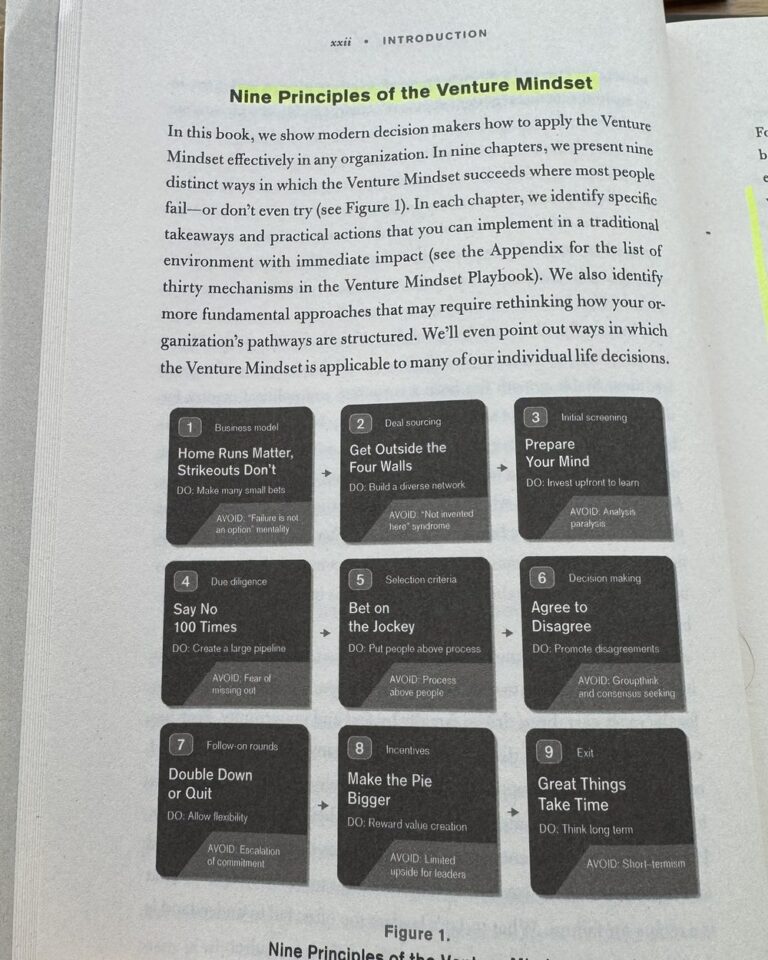
A rule that fights human nature
The first rule is the base for all others. Of every twenty startups, the authors write, one on average becomes a runaway success, returning 10 or even 100 times the money. One 100x winner pays for all the failures around it.
The home-run rule
Twenty bets, one winner
Illustration of the rule in The Venture Mindset: of every twenty startups, one on average becomes the runaway success.
Human instinct fights this: we want every single bet to pay. Public markets work the same way, as Hendrik Bessembinder found out: the majority of the home runs come from a small group of companies. In his study of US stocks from 1926 to 2016, 1,092 of 25,332 companies, just over 4 percent, created all the net wealth above one-month Treasury bills.
Venture capitalists follow the same law. As Ilya posted on his LinkedIn profile, a small group of about 120 VCs generates the majority of US venture capital profits. In his study with Blake Jackson of just over 12,000 VCs at US firms from 1996 to 2025, the top 1 percent, about 120 people, account for 57 percent of $1.2 trillion in net profits. The top 5 percent account for about 90 percent.
The power law, one level up
Who earns the profits in US venture capital
Cumulative share of $1.2 trillion in inflation-adjusted net profits, 1996 to 2025. Source: Blake Jackson and Ilya Strebulaev, NBER Working Paper 35501.
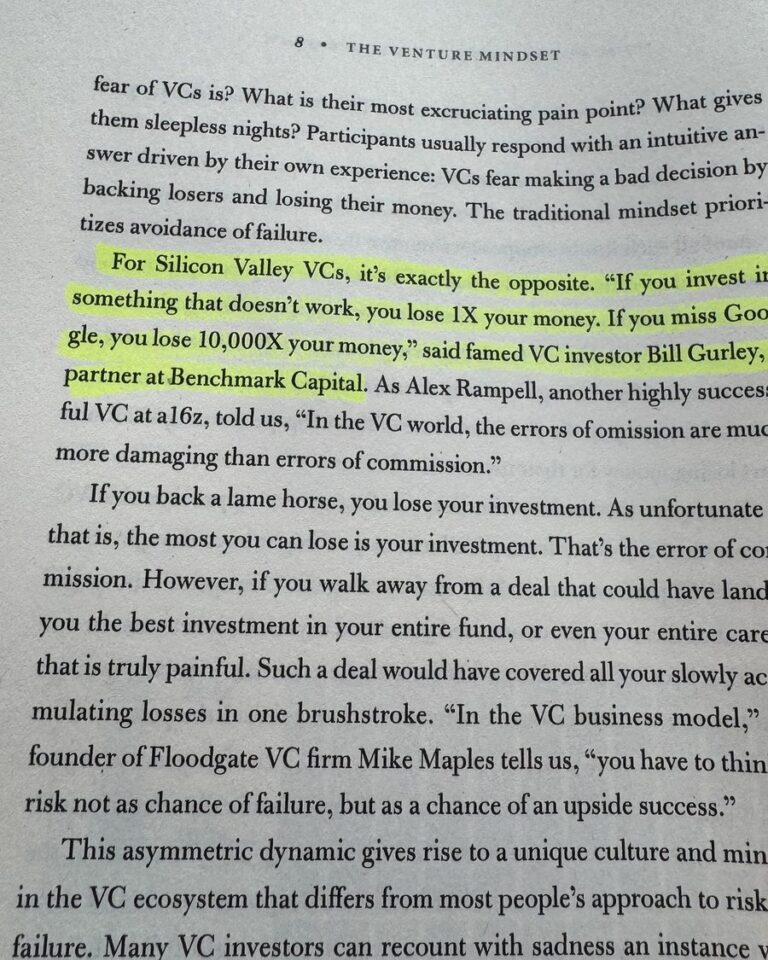
“If you invest in something that doesn’t work, you lose 1X your money. If you miss Google, you lose 10,000X your money.”Bill Gurley, Benchmark, quoted in the book
Consensus feels safe. The data disagrees.
I see many funds that bet on consensus, believing that thinking something through as a group makes a difference. The research presented by Alex and Ilya says otherwise: requiring everyone to agree does not make that difference. On the contrary. Investing is a mindset game, and that’s an art humans have to master.
It is like learning to play an instrument. Everybody can get to some level fast and play a bit together. But there is only one Eric Clapton or Jimi Hendrix. They dedicate their lives to the art and reach a level where the rest of us stop playing and start listening. Pairing them with a group of hobby guitarists won’t make the hobby guitarists better right away. On the contrary.
One has to accept that investing follows the same learning curve. It takes practice over years and decades, and the returns come late and steep, parabolic at the end.
Companies follow the same concept. Their returns do not climb step by step either. The best observable example of recent years is Nvidia. For a long time it was a company among many, and critics declared it dead over and over again. Then, in 2023, the stars lined up, and on 18 June 2024 Nvidia became the most valuable company in the world. It did not happen overnight. It grew out of 31 years of small, continuous improvements.
The book has a name for the remedy: agree to disagree. Brian Armstrong leads Coinbase this way. He told David Senra that any one of the leaders with a budget can say yes to an internal pitch and fund it. He voted no on USDC, the stablecoin. Somebody else funded it, and by his estimate it brought in about $800 million in revenue in 2025.
Drug development has worked this way from the start
That’s the general process in drug development. Even 20 years ago, VCs never poured in the billions a company needs to bring a drug to the market. Every step of the process exists to reduce risk.
Double down or quit
How investors finance a drug, one gate at a time
- DiscoveryA few hundred thousand euros, private and public money
- IND stageA few million: GLP safety studies, first GMP manufacturing
- Phase 1First trials in humans
- Phase 2Only 28.9% pass. Pharma partners often buy in here
- Phase 3Large trials, larger rounds
- Approval and market7.9% of Phase 1 candidates get here, then launch territory by territory
A typical European path as described in this review. Phase success rates: BIO, Informa Pharma Intelligence and QLS Advisors, 2011 to 2020 data.
Companies start with a few hundred thousand euros of private capital, paired with public funding, to get the first experiments off the ground. When they work, the company gets a few million to reach the IND stage: to conduct the GLP safety studies and to develop the first manufacturing process to GMP standards for clinical trials. If that works, enough money follows to get through Phase 1 and then Phase 2, and there, in most deals, a pharma partner buys in and provides further funding.
The cash follows a milestone plan too, oriented toward the next de-risking steps: Phase 3, regulatory approval, market entry per territory. Entrepreneurs and VCs see their returns along that path.
The numbers explain why. Deloitte puts the average cost of taking a drug from discovery to launch at $2.67 billion in 2025, counting the cost of the failures. A separate study by BIO, Informa Pharma Intelligence and QLS Advisors estimates that a drug candidate entering Phase 1 has a 7.9 percent chance of approval, based on 2011 to 2020 data. Phase 2 is the biggest hurdle: just 28.9 percent of candidates pass it.
“There are some industries in which real optionality has been used successfully. We often astonish our executive participants when we point out that, in the pharmaceutical industry, each and every drug investment has a negative net present value early on.”Ilya Strebulaev and Alex Dang, The Venture Mindset
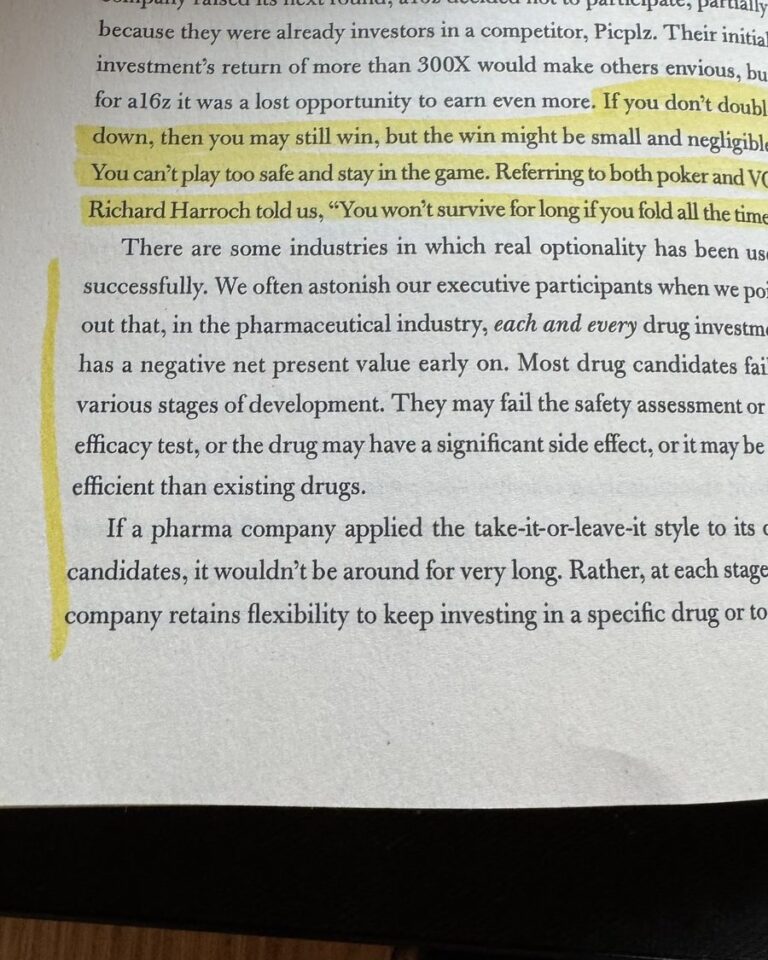
Alex Dang on my image of a player with 100 poker hands at once: “You’re absolutely right.” VCs make many bold bets, keep each one small and “will not bet the farm”, quit the weak ones and double down on the ones that work.
Alex Dang, EP 152 of Beginner’s MindListen at 1:13:47 ↗
For an AI platform company, the poker image raises one more question: how many of those hands lose together when the shared model, the biological idea behind it or the manufacturing process turns out to be wrong?
The clinic has no shortcut
You cannot shortcut drug development like SaaS development. ChatGPT, built on GPT-3.5, launched on 30 November 2022 as a free research preview. In hindsight the chatbot was impressive but flawed. It is like a lead candidate in drug discovery. Hooray, you have a first concept. In software you can put version 1 on the market, and some people line up to buy it, just to be the first mover. Nobody can sell a medicine before the regulator approves it.
When I read the statements of Demis Hassabis and Dario Amodei, it feels to me that their thought process ends with the IND when they say that in ten years we will have solved and cured all or most diseases. Hassabis told 60 Minutes in April 2025 that the end of disease is within reach, “maybe within the next decade or so”. Amodei wrote in 2024 that powerful AI could compress 50 to 100 years of biological progress into 5 to 10 years and help cure most human disease. But the IND is just the beginning.
Before anyone can say a disease is solved and cured, the drug needs to reach the market and every human being on the planet. That needs clinical development, manufacturing, a concept the healthcare systems accept, maximum patient adherence, and, as the last step, the logistics that ship it to every corner of the world.
Their work has already moved the field a long way since AlphaFold. The long stretch after the IND is where drug developers and the new money meet, and where the venture mindset gets its hardest test.
The A-team in biopharma
An A-team in biopharma, as Alex Zhavoronkov describes in his article, needs more than 1,200 skills to take a drug from zero through Phase 2. That’s a lot of know-how from diverse, often contradictory fields that a drug development team needs to put together. Strong science is just the beginning and contributes a handful of skills. A biotech A-team must be able to lead a large team that comes together for each task and breaks up again afterwards, like a project team. That’s hard.
“As General Georges Doriot, who started one of the first venture capital firms back in 1946, summarized it succinctly: Always consider investing in a grade A man with a grade B idea. Never invest in a grade B man with a grade A idea.”From The Venture Mindset
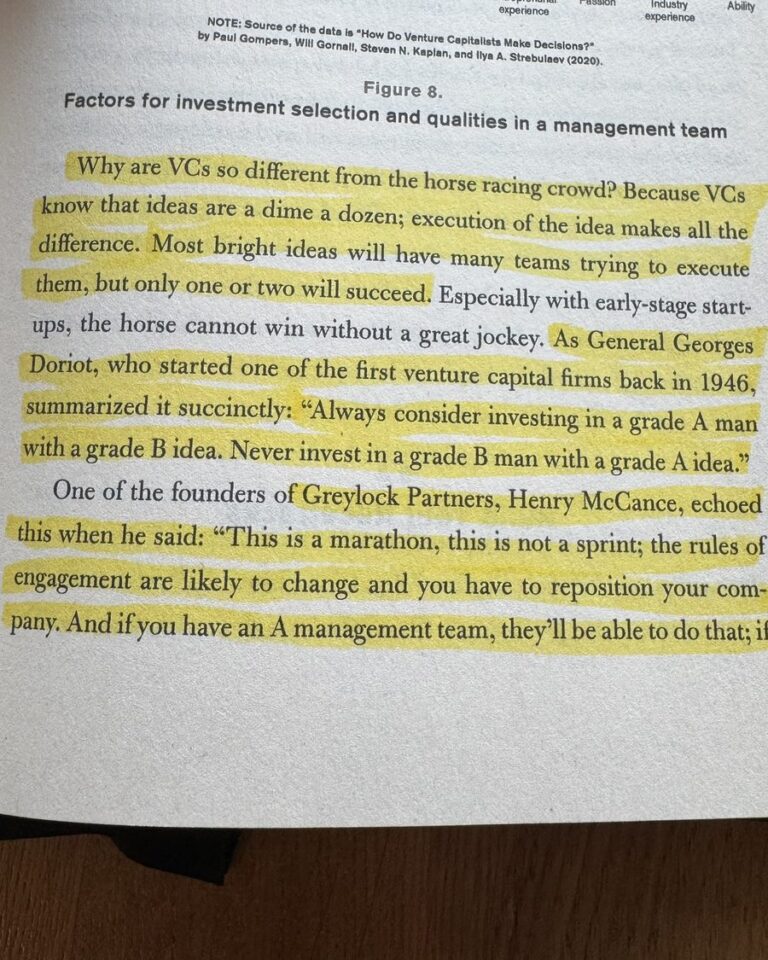
In health tech and biotech, patents and other IP weigh more than in other fields, yet the team still matters most, because “no Excel would help you” with the challenges nobody can predict.
Alex Dang, EP 152 of Beginner’s MindListen at 24:26 ↗
A bigger pie
The point of scaling a company is creating a bigger pie. That’s not European DNA. Most companies, still today in 2026, do not offer stock option plans to all their employees and fall behind. Index Ventures found that European companies reserve two-thirds of their stock options for executives, while in the US the reverse is true, and that employees own about 10 percent of late-stage European startups against 20 percent in the US.
Who owns the upside
Employee ownership at exit
Share of late-stage startups owned by employees. Source: Index Ventures, Rewarding Talent.
The successful US companies coming out of Silicon Valley do one thing that sets them apart from almost everyone else: participation in the success of the company, down to the cleaning staff. People know that when they succeed, like Nvidia did, they will be super rich. That gives them motivation. Ownership.
It has no tradition in Europe, and it is a stumbling block, because people often think in percentage owned. That’s not the most important thing. Owning 100 percent of zero is still zero. Owning 3 percent of a $5 trillion company is for sure bigger than zero, and a shot into the Forbes top 10. That only works when a strong team feels ownership, motivated through stock options.
In a corporation, fixed salary makes up 80 to 90 percent of pay. In a startup the expectation flips, and people expect fixed salary to make up no more than 10 to 20 percent.
Alex Dang, EP 152 of Beginner’s MindListen at 24:26 ↗
Great things take time
BioNTech and Moderna are great examples of “great things take time”, next to Nvidia. mRNA was in development for decades until the rocket-catch moment came in early 2020. BioNTech started its vaccine program on 12 January 2020. On 24 February, Moderna shipped its first clinical batch of mRNA-1273 to the NIH, 42 days after selecting the sequence.
Decades, then days
What a long runway buys
The majority of returns in a portfolio come from a small group of companies, and the whole exercise is finding them and scaling them. The problem: most of the time they all look the same, or like big losers. Think of Nvidia or Moderna. For a long time both companies looked like also-rans, and many people declared them dead more than once.
What to do on Monday
Start with small bets, double down when the data confirm that a bet works, and cut the losses when the data say it was wrong.
“Don’t bet on your actions; bet on the option to bet later by making small investments.”From The Venture Mindset
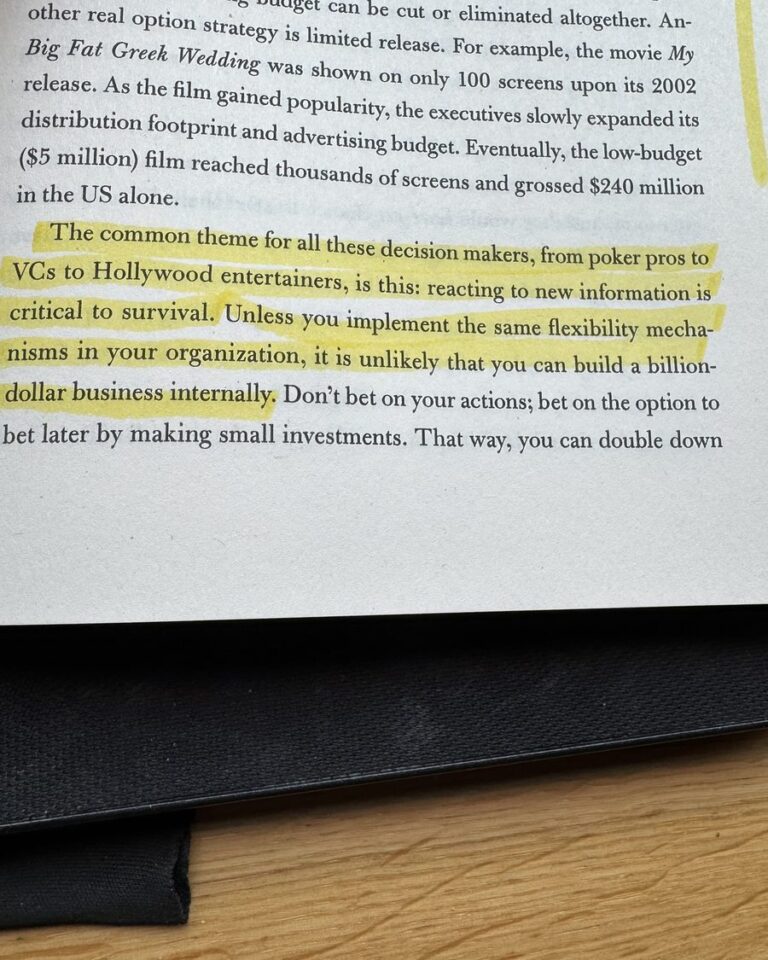
It surprised me to hear Coinbase CEO Brian Armstrong say on David Senra’s podcast that his company tests new ideas the same way, step for step. Two or three people try an idea, and only when it hits key milestones does the company “do the Series A, internally.” In his words: “So, we try to treat it a little bit like venture capital.”
Who should read it
Everybody interested in investing in venture capital, and everybody who has to decide before all the facts are in.
Alex and Ilya have put together a description of how decisions under uncertainty work outside the classroom, a practical guide rooted in the data of successful venture capitalists.
Nothing in it contradicts what I have seen in the market. Reality confirms every single thesis in the book.
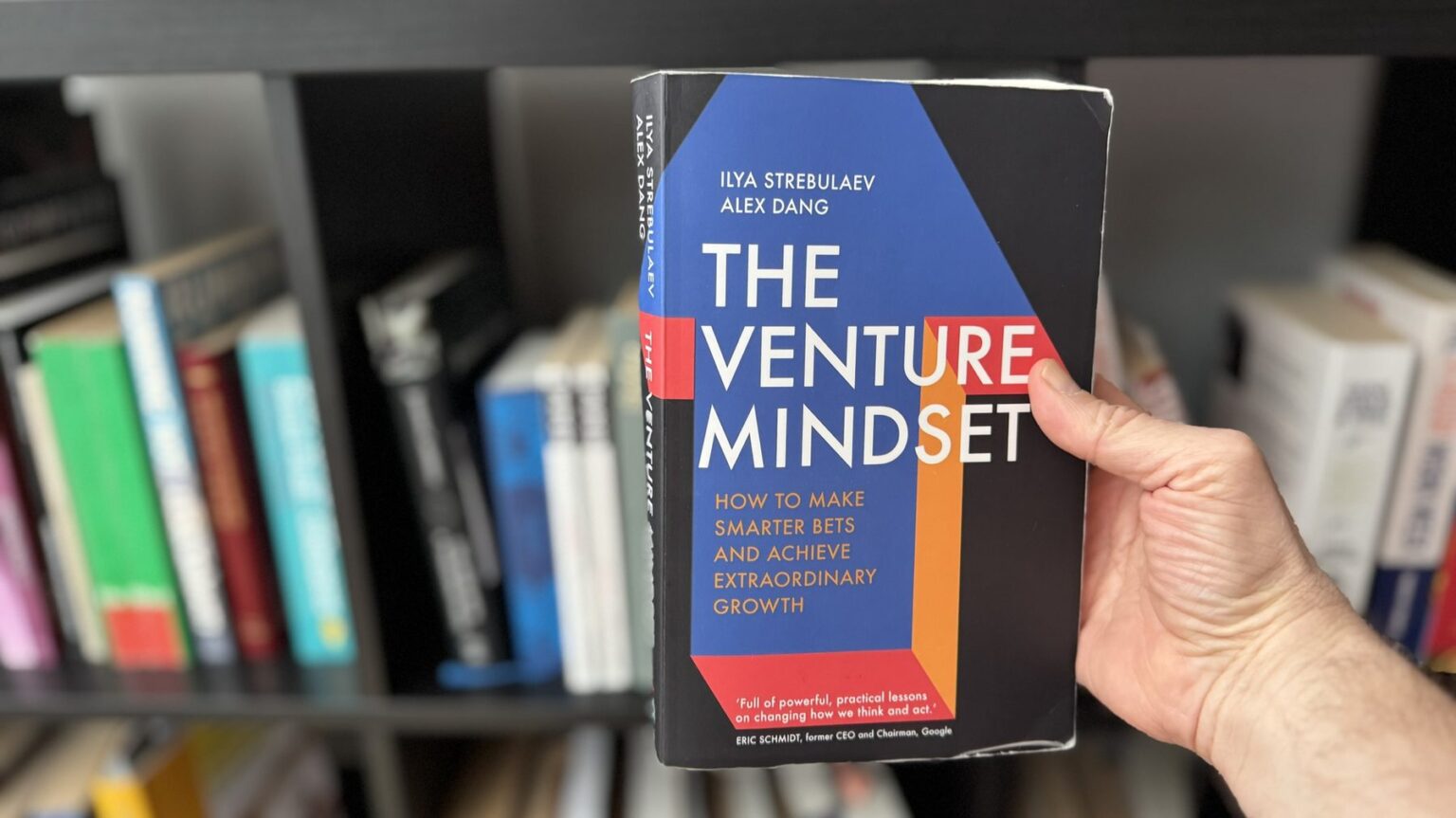
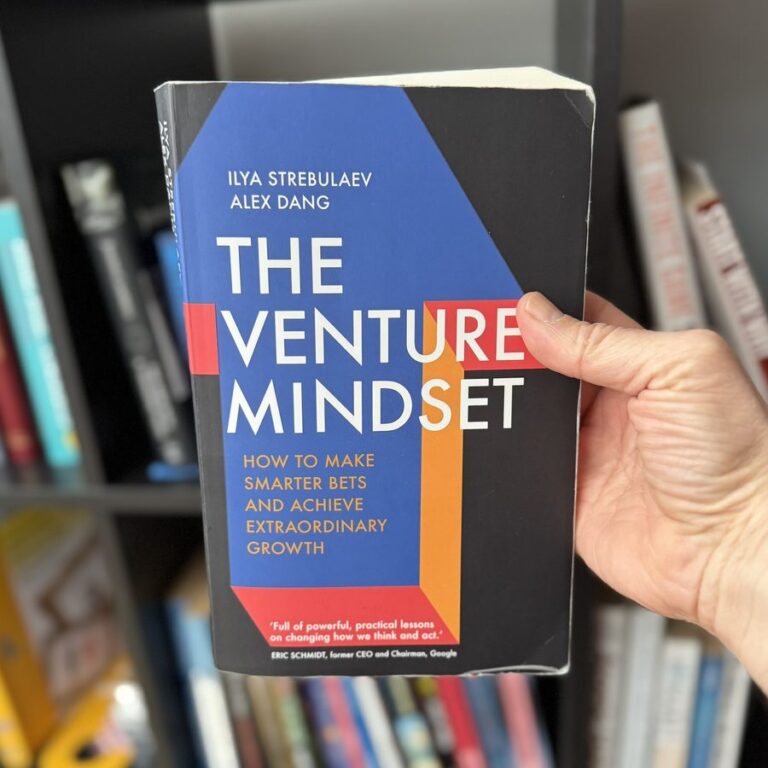
The Venture Mindset: How to Make Smarter Bets and Achieve Extraordinary Growth, Ilya Strebulaev and Alex Dang
Affiliate link: buying through it supports the show at no extra cost to you.
Read it with The Power Law
The Power Law gives the history of an entire industry dealing with decisions under uncertainty, while The Venture Mindset describes the thinking and decision making behind it.
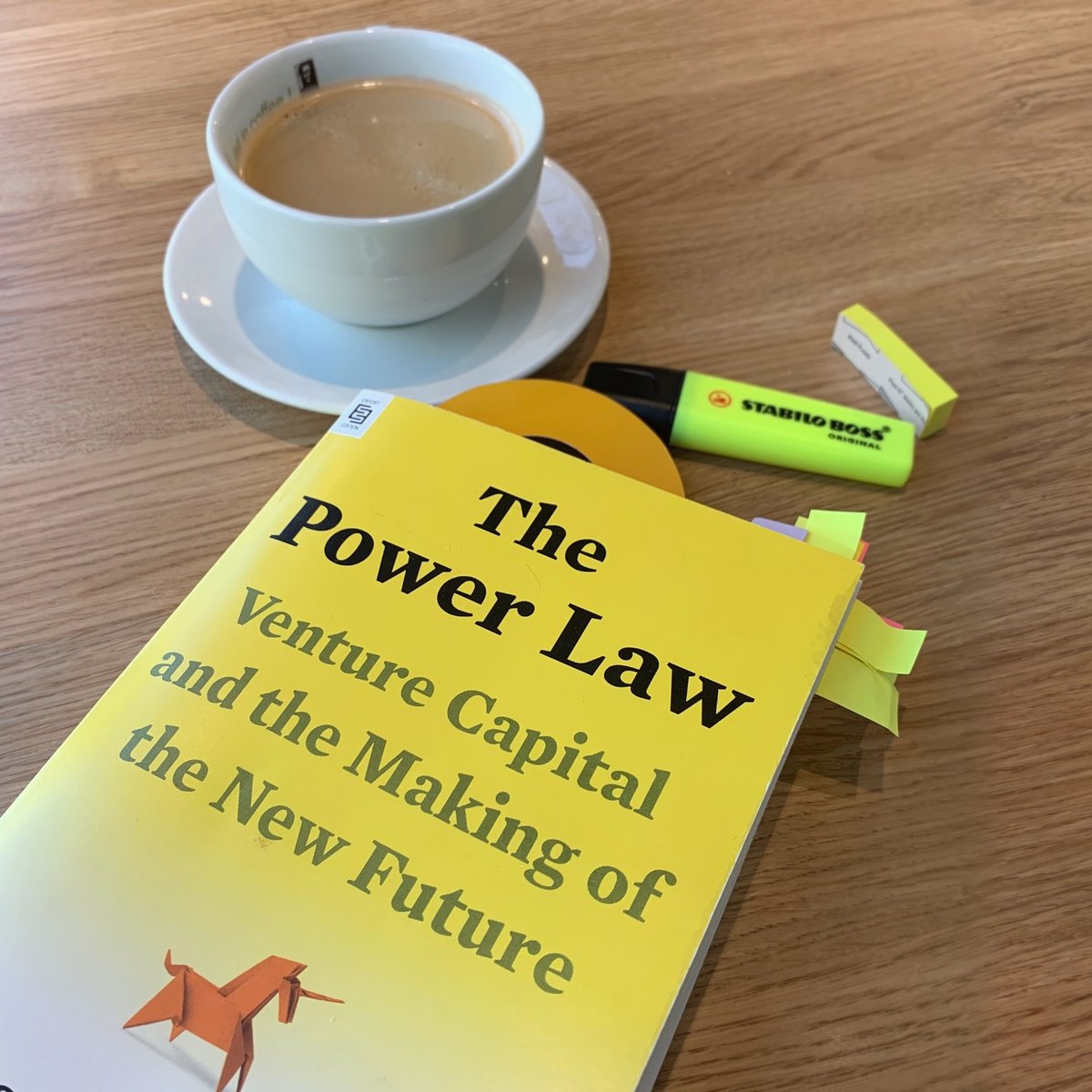
The book that solved my 2006 venture mysteryThe Power Law, Sebastian Mallaby
The book every AI investor needs before buying into biotechThe Venture Mindset, Ilya Strebulaev and Alex Dang · you are here
From my highlights
“In the VC business model, you have to think of risk not as chance of failure, but as a chance of an upside success.”Mike Maples, Floodgate, quoted in the book
“If we can get to a no quickly on an idea, that’s almost as good as getting to a yes.”From The Venture Mindset
“Prune your flowers; don’t let a thousand bloom.”From The Venture Mindset
“You can’t manage innovation; you can only lead it.”From The Venture Mindset
“People over process is the VC mantra.”From The Venture Mindset
Listen
- My review on the show: EP 151 of Beginner’s Mind47 minutes, January 2025. Seven lessons from The Venture Mindset, from home runs to great things take time.
- Alex Dang on the show: Conviction beats consensusEP 152, the co-author on how venture investors decide, with questions, clips and the full transcript.
- Alex Dang, Spark 20: Everyone agrees? Think againThe 20-minute version of the conversation.
- The book that solved my 2006 venture mysteryMy review of Sebastian Mallaby’s The Power Law.
- Alex Zhavoronkov: Can AI fix drug discovery?The Insilico Medicine CEO on AI in drug development, EP 108.
- Jensen Huang’s legacy: how NVIDIA made the AI age possibleThe decisions behind 31 years of small, continuous improvements.
- The BriefingDeals, guests and big questions in biopharma, AI and deep tech.
Sources
Ilya Strebulaev and Alex Dang, The Venture Mindset: How to Make Smarter Bets and Achieve Extraordinary Growth (Portfolio). link.amazon
Isomorphic Labs, $5 billion Series C, 17 November 2026. cnbc.com
Nabriva Therapeutics, €42 million Series A, 2006. biospace.com
Hendrik Bessembinder, “Do Stocks Outperform Treasury Bills?”, Journal of Financial Economics 129 (2018). doi.org
Blake Jackson and Ilya Strebulaev, “Human Capital in Venture Capital: Evidence from 100,000 Venture Capitalists”, NBER Working Paper 35501. nber.org, news.stanford.edu
Deloitte, Measuring the return from pharmaceutical innovation, 16th edition: $2.671 billion average cost per asset in 2025. deloitte.com
BIO, Informa Pharma Intelligence and QLS Advisors, Clinical Development Success Rates and Contributing Factors 2011-2020. bio.org
Alex Zhavoronkov, “The Naked Emperors of AI Drug Discovery”, Forever.AI, 31 August 2026. forever.ai
Demis Hassabis on 60 Minutes, April 2025, as reported by Business Today. businesstoday.in
Dario Amodei, “Machines of Loving Grace”, October 2024. darioamodei.com
OpenAI, “Introducing ChatGPT”, 30 November 2022. openai.com
Moderna, first clinical batch of mRNA-1273 shipped to the NIH on 24 February 2020. biospace.com
Index Ventures, Rewarding Talent: employee ownership and option allocation in Europe and the US. indexventures.com, tech.eu
Brian Armstrong in conversation with David Senra, 1 March 2026. davidsenra.com
Alex Dang on Beginner’s Mind, EP 152, at 24:26 and 1:13:47. buzzsprout.com